Réservez maintenant → Tickets
A bit of history
Let’s explore part of Belgium's railway history, from rural tramways to our line and our association.
Belgium, cradle of European railways
From steam power to the first public lines, railways profoundly transformed the country.
From the early 19th century, Belgium became one of the pioneering countries in railway development in Europe.
Although railways originated in England, their structure and expansion across the continent were largely driven by Belgian engineers and companies.
- Belgium played a pioneering role in the history of European railways. From the first decades of its independence, the country invested heavily in rail transport to support industrialisation and efficiently connect economic regions.
- The first private industrial tracks were used to transport coal from mines to canals, using wagons pulled by horses.
- In 1835, the opening of the Brussels–Mechelen line marked a turning point: it was the first public railway line on the European continent. The network quickly expanded towards Antwerp, Liège, and the main industrial regions, making railways a key driver of economic and social development.
- Steam power, fuelled by Belgian coal, replaced stagecoaches and revolutionised travel, despite still modest speeds.
Did you know?
Dating from 1835, the Brussels–Mechelen line was the first public railway line in continental Europe!
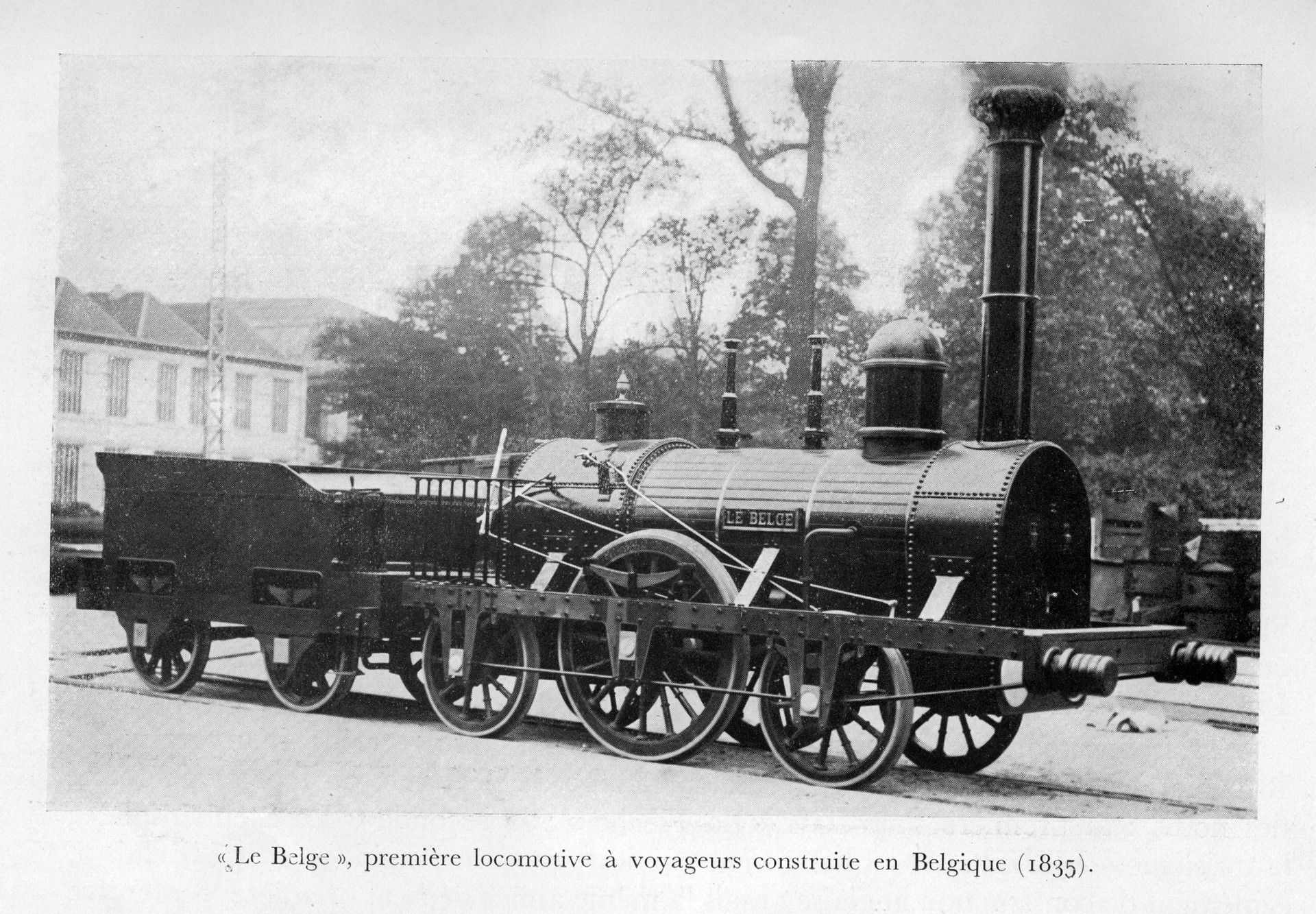
"Le Belge" (the Belgian), the first passenger locomotive built in Belgium (1835).
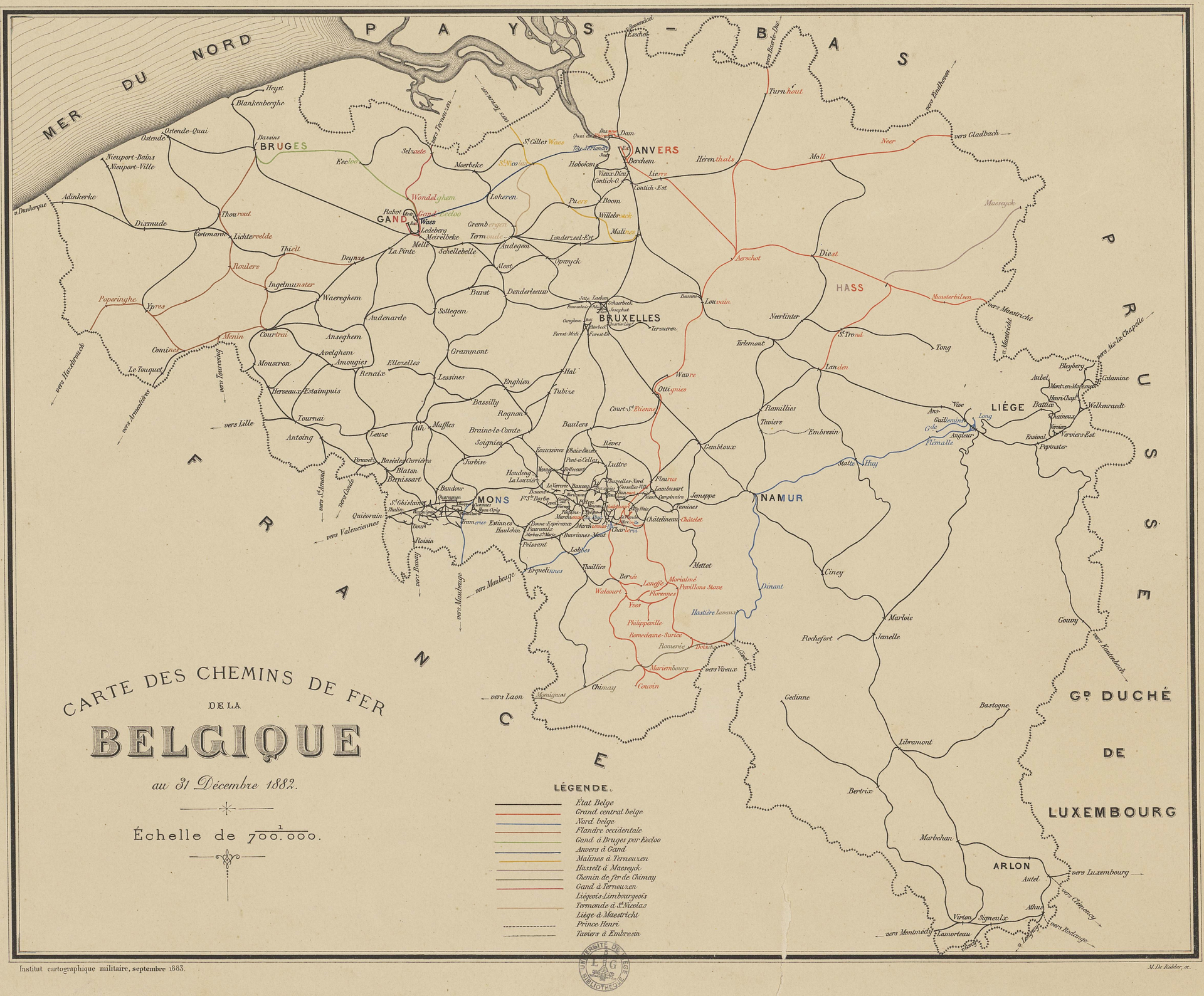
Map of Belgium’s railway network in 1882.
1884–1940
The golden age of rural tramways
A dense network serving rural areas, the economy, and social connections.
On 28 May 1884, the Belgian State created the National Company of Light Railways ("Société Nationale des Chemins de fer Vicinaux", abbreviated as SNCV) to establish a vast network of secondary lines, aimed at opening up rural regions.
- The SNCV’s objective was clear: to provide accessible public transport for rural populations, workers, goods, and agricultural products.
- The presence of tramways boosted local trade: markets, fairs, cafés, and inns developed along the lines.
- The rural tramway network expanded rapidly, becoming one of the densest in the world.
- Some lines were electrified very early on, with the country’s first being the Liège–Herstal line in 1893. Rural tramways also contributed to the development of local tourism, connecting villages, valleys, and natural sites.
Did you know?
Founded in 1884, the SNCV would go on to operate more than 4,800 km of lines at its peak.
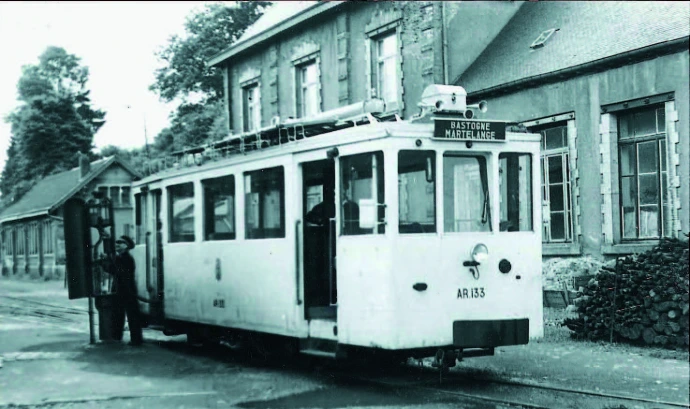
The AR133 refuelling at Martelange
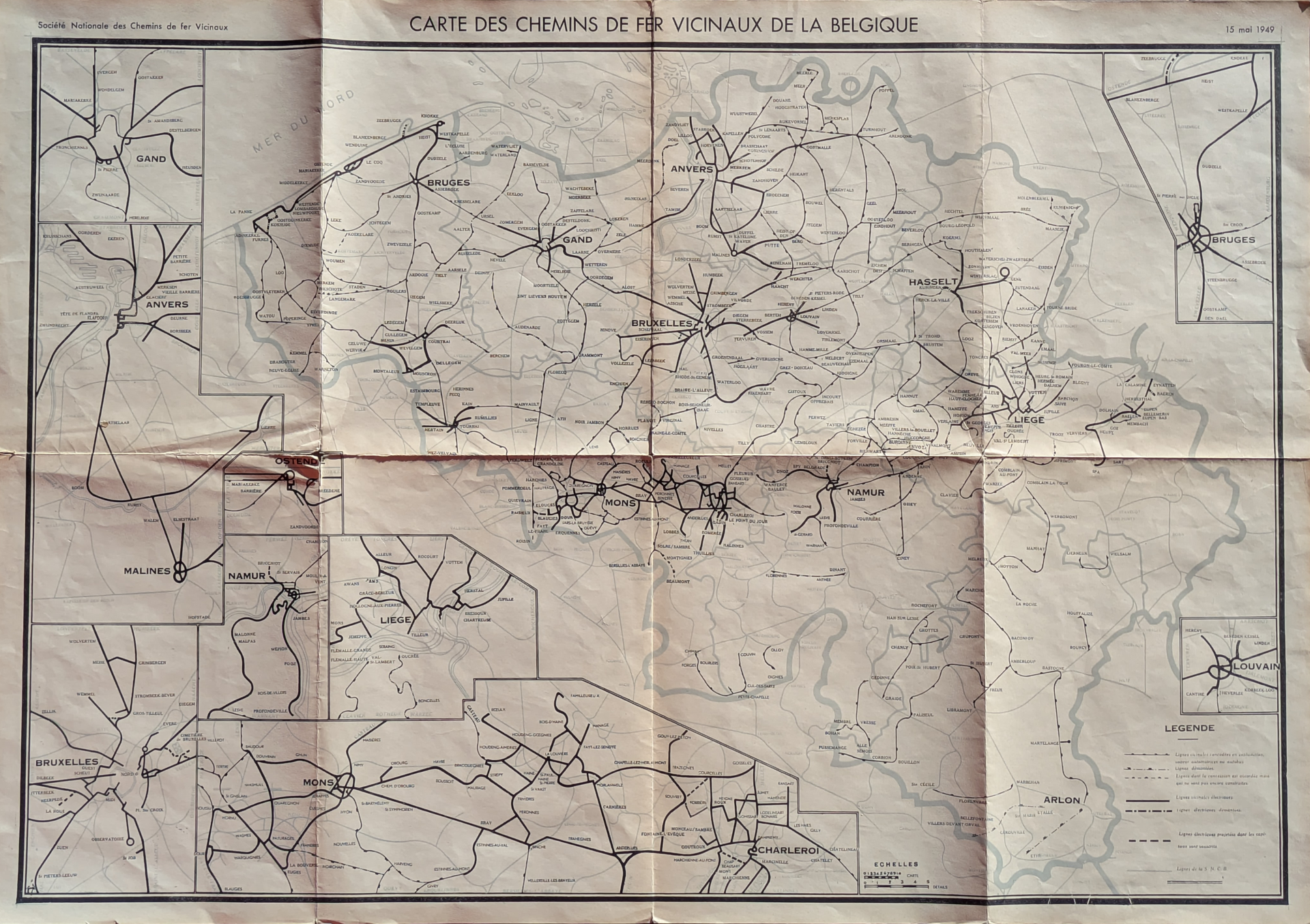
Map of the rural tramway network in 1949. Electric lines are shown in bold - SNCV.
1885–1959
The Comblain-la-Tour – Manhay – Melreux line (via Erezée)
A rural line in the heart of the Ardennes, between valleys and plateaus.
Studied as early as 1885, this rural tramway line was built in the early 20th century to serve the remote Ardennes region.
- The line connecting Melreux to Manhay and Comblain-la-Tour was designed to serve a rugged and hard-to-reach part of the Ardennes. After several studies, the concession was granted in 1904 to the Ardennes Rural Tramway Company ("Compagnie des Chemins de fer Vicinaux de l’Ardenne", abbreviated as CFVA).
- At Melreux, the rural tramway line connected with the national railway network, allowing passengers and goods to transfer to major national lines.
- Built between 1908 and 1912, the line crossed valleys and plateaus over nearly 64 kilometres.
- It played an essential role for local residents, forestry workers, and farmers.
Did you know?
The entire line extended over 64 km. With an average speed of 25 km/h, it took about 2 hours and 30 minutes to travel its full length.
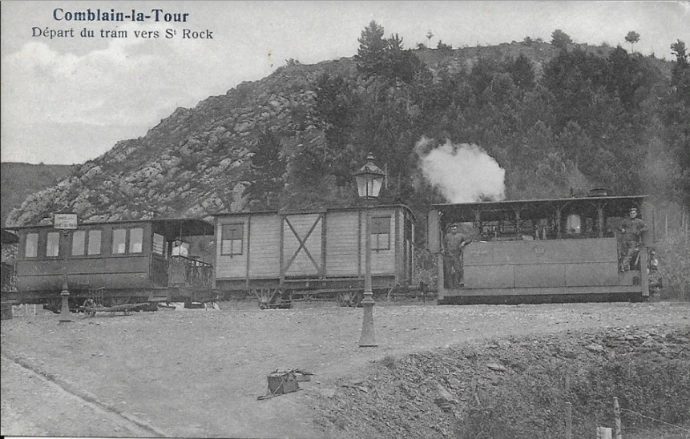
Rural tramway at Comblain-la-Tour.
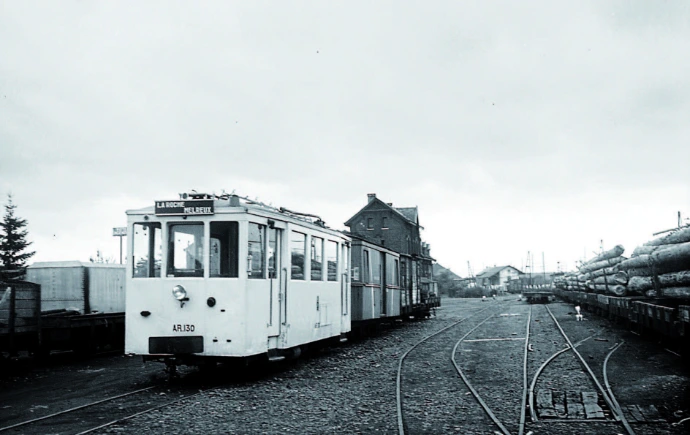
AR130 and its freight convoy at Melreux.
1914–1918
An essential line in times of war
Supply and survival in the Ardennes.
During the First World War, rural tramways played a vital role in supplying cities, while the main railway lines were reserved for the occupying forces.
- Trams carried coal, food supplies, and people between towns and the countryside.
- Urban hardship drove many residents to travel to the Ardennes in search of food.
- As elsewhere in the country, the occupying forces dismantled the track between Harre and Melreux, both to limit these movements and to reuse rails and rolling stock for their own needs.
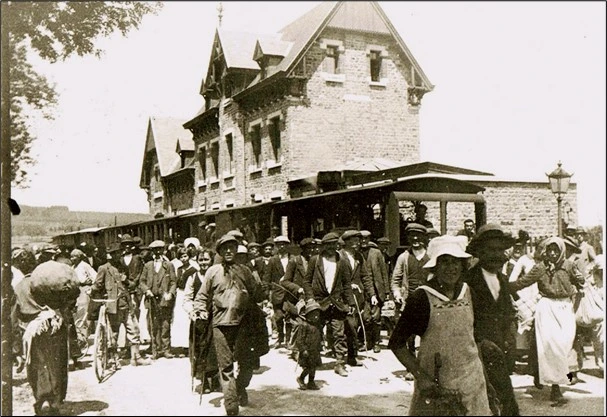
In 1917, during a time of famine, travellers arrived in Manhay in search of supplies
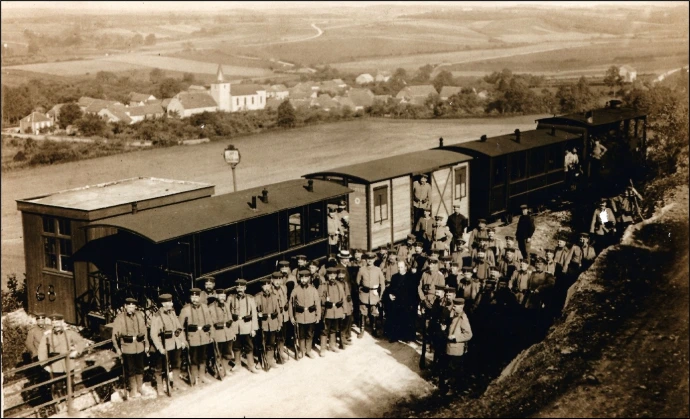 A German contingent stopped at Ny station.
1930s
Local life and tourism
The tramway at the heart of everyday life.
With the rise of tourism and the introduction of paid holidays in 1936, the line experienced increased passenger numbers.
- In the 1930s, the Comblain-la-Tour – Manhay – Melreux line welcomed both local residents and visitors coming to discover the Ardennes.
- Rural tram stops became real meeting places. Cafés, inns, and small shops thrived thanks to the regular passage of trams.
- Passenger comfort gradually improved with the introduction of enclosed carriages, better suspension, and heating.
Did you know?
Introduced in 1936, paid holidays marked a turning point for mass tourism in Belgium.
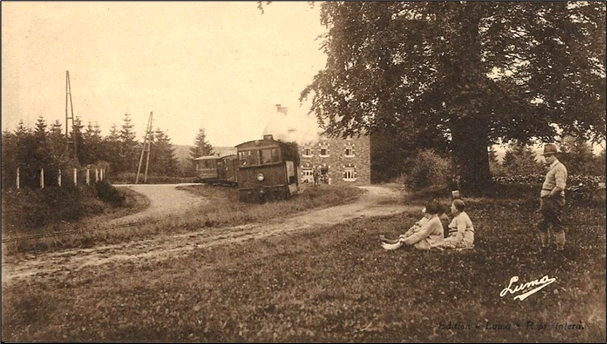
Relaxation at Burnontige, near Manhay
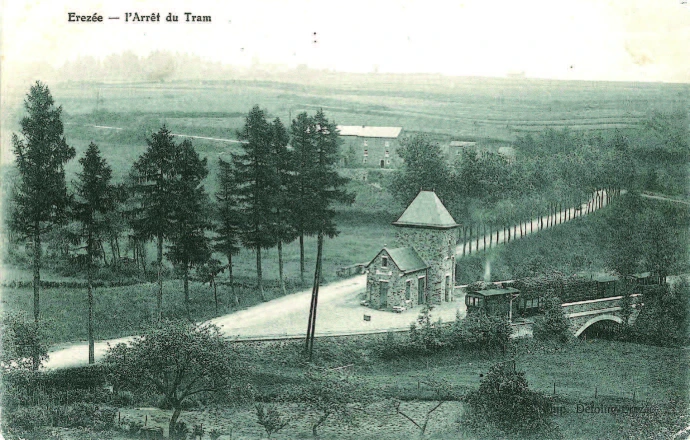
Mixed train at Pont d'Erezée
1959
The end of regular operations
The decline of rural tramways.
After the Second World War, competition from road freight transport and the rise of the automobile led to the gradual closure of rural tramway lines.
- As early as 1931, the SNCV was authorised to operate bus services, which were often more flexible and less costly.
- Despite the modernisation of rolling stock, particularly with the introduction of diesel railcars, the decline continued.
In 1954, passenger services ended on the Comblain-la-Tour – Manhay – Melreux line, followed by freight services in 1959, bringing several decades of regular operation to an end. - In 1954, passenger services ended on the Comblain-la-Tour – Manhay – Melreux line, followed by freight services in 1959, bringing several decades of regular operation to an end.
Did you know?
The ART 123, part of the TTA’s vehicle collection, was the last railcar to operate in the province of Luxembourg, used during the dismantling of the Bastogne–Martelange line in 1966.
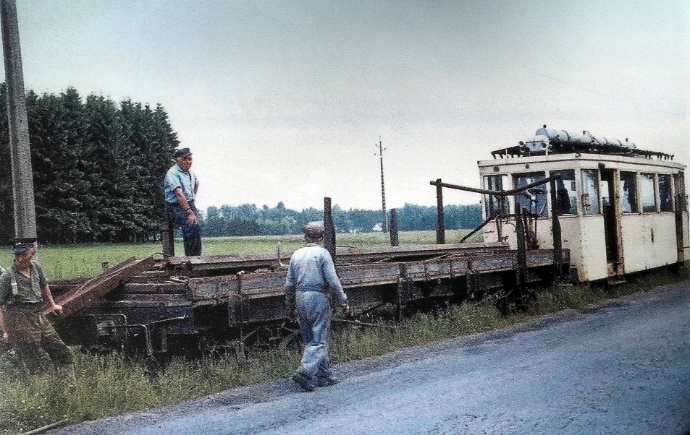
ART 123 railcar tractor on the Bastogne–Martelange line during dismantling works in 1966
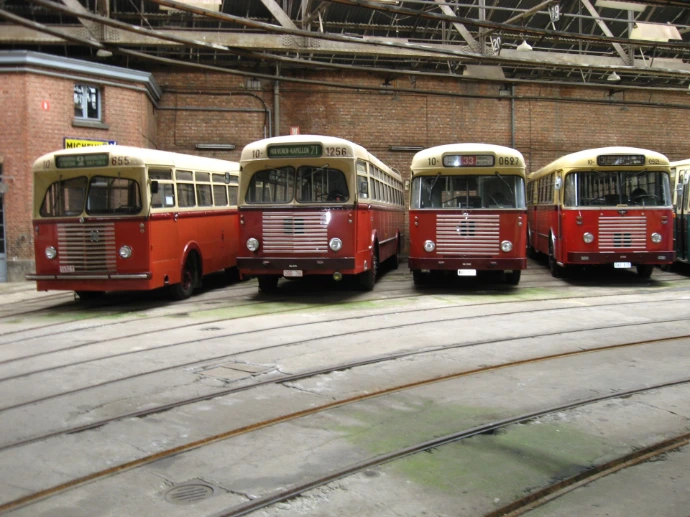
Rural buses in red livery that gradually replaced the trams
1964-1966
The birth of the Aisne Tourist Tramway
Saving a rural tramway line from oblivion.
Refusing to let this important heritage disappear, a group of enthusiasts founded the non-profit Aisne Tourist Tramway (TTA) to preserve and bring back to life a unique part of Belgium’s rural tramway network.
- In 1964, the Aisne Tourist Tramway association was created by members of AMUTRA, the organisation managing the tram museum in Schepdaal, with the ambition of preserving an emblematic line of this railway heritage.
- Thanks to cooperation with the SNCV and local authorities, the first restoration works were undertaken.
- On 25 June 1966, the first passengers boarded the AR133, marking the rebirth of the line for heritage and tourism purposes.
Did you know?
The TTA was the first tourist railway to be established in continental Europe!
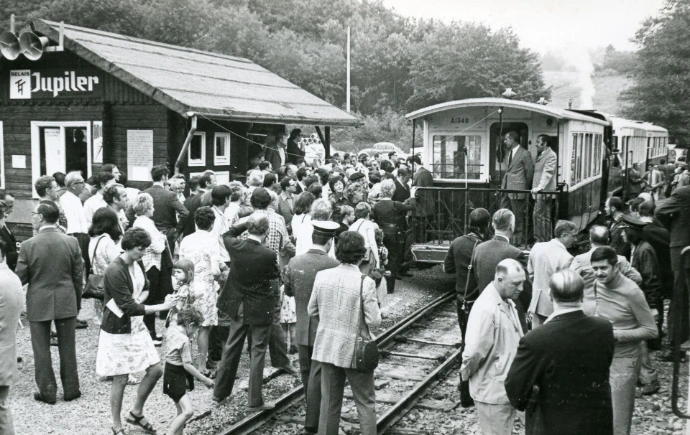
First TTA station (Photo Jean Evrard † – André Corteil Collection)
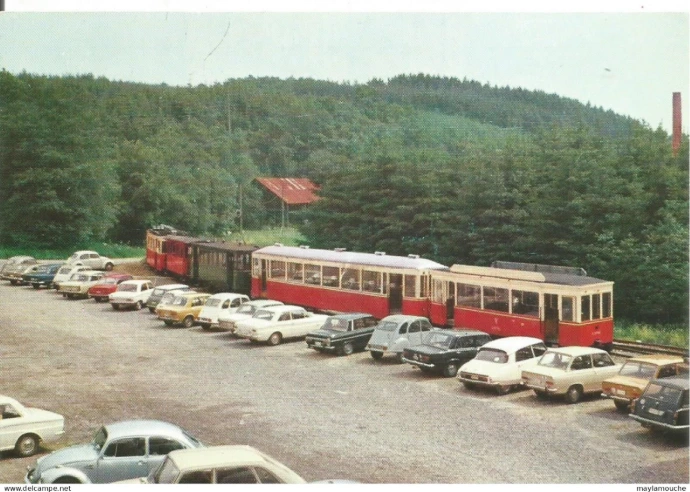
Large train set and full parking area
1966–2013
Building, preserving, and operating
Decades of volunteer work dedicated to heritage.
Over the decades, the TTA has grown, developed its infrastructure, and restored historic railway equipment.
- From 1967 onwards, the Blier depot was built and became the technical heart of the association.
- Over the years, new sections of the line were brought back into service, and the current Pont d’Erezée station building was inaugurated in 2005.
- The TTA has become a recognised tourist attraction, while remaining true to its mission of preserving rural tramway heritage.
Did you know?
Since 1966, TTA members have dedicated hundreds of thousands of hours to preserving the line and its rolling stock.
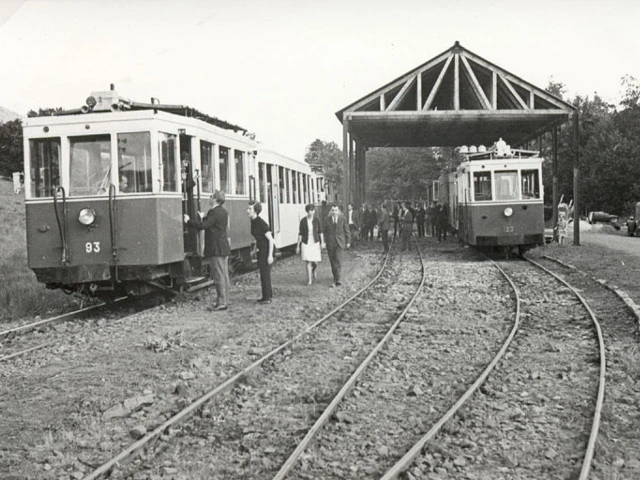
Early stages of the Blier depot
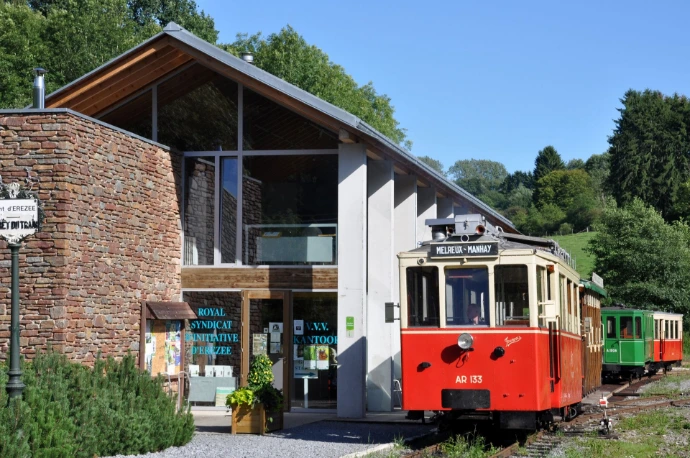
Current TTA station, inaugurated in 2005
2013–2015
The return to Lamorménil
A major project to reconnect with the line’s history.
After several decades of interruption, the link to Lamorménil was rebuilt thanks to a major restoration project.
- Extensive restoration work was carried out with the support of the European Union, the Walloon Region, the Province of Luxembourg, and the municipalities of Érezée and Manhay.
- Bridges, tracks, and infrastructure were restored to ensure safe operations.
- The official inauguration in 2015 marked a significant milestone in the history of the TTA.
Did you know?
The total length of the line, between Pont d’Érezée and Lamorménil, is 11.2 km!
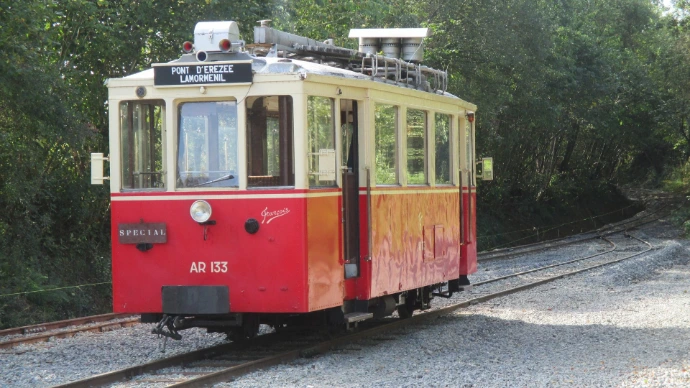
AR133 arriving in Lamorménil after the works
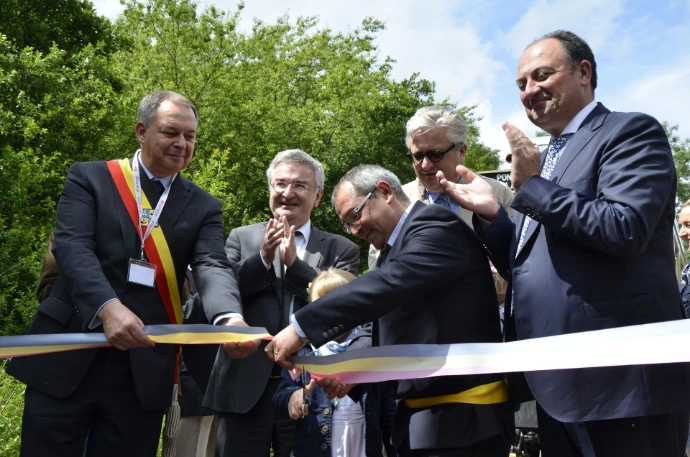
Official inauguration of the line
2026
The TTA today
A living heritage shaped by memory, volunteers, and the future.
Today, the Aisne Tourist Tramway continues to bring a unique railway heritage to life in the heart of the Ardennes countryside. Each year, it welcomes several thousand visitors eager to discover the history of rural tramways in real-life conditions.
- Each year, the TTA offers around sixty operating days, featuring numerous special events (Easter, Halloween, Saint Nicholas, Christmas, Mobility Day, Aperitif Tram, etc.).
- The site also includes a museum retracing the history of the line and the association, showcasing remarkable objects and vehicles.
- Committed to heritage preservation and authenticity, the TTA prioritises local partnerships and relies on the dedication of its volunteers.
Key figures
- More than 60 operating days per year
- More than 100 museum opening days
- Around 10,000 passengers per year
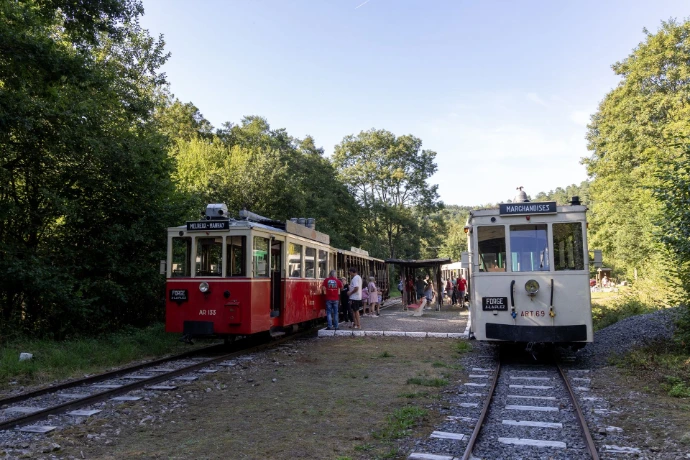
Aperitif Tram at the TTA